

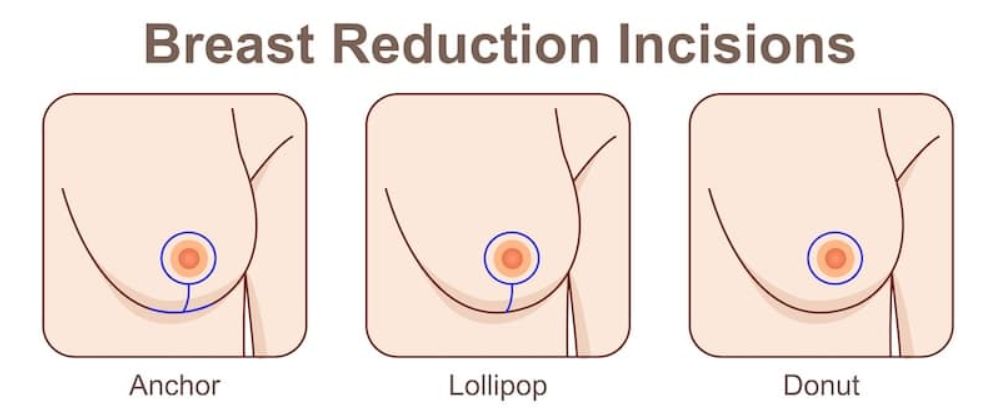
Breast reduction surgery uses several surgical techniques to remove excess breast tissue, fat, and skin while reshaping the breast to achieve better proportions. According to the American Society of Plastic Surgeons, plastic surgeons choose specific incision methods based on breast size, skin elasticity, and the amount of tissue removal required. Different techniques influence scar patterns, recovery time, and surgical outcomes, making technique selection crucial for achieving optimal results that meet your aesthetic and functional goals.
How Breast Reduction Surgery Works
Breast reduction surgery reshapes the breasts by removing excess tissue and tightening surrounding skin to achieve a balanced breast size and improved body proportion. The procedure involves removing glandular tissue and excess fat from the breast, then repositioning the nipple and areola to a higher, more aesthetically pleasing location. As noted by Mayo Clinic, the surrounding skin is then lifted and tightened to create a more youthful contour. This combination of tissue removal and skin reshaping addresses both the physical discomfort caused by large breasts and cosmetic concerns about breast appearance.
For comprehensive information about the overall procedure, explore our pillar article on Breast Reduction Surgery Explained: Procedure, Benefits, Risks, and Recovery.
Why Different Surgical Techniques Are Used
Different surgical methods are used depending on the patient’s breast size, skin quality, and cosmetic goals. Breast anatomy varies significantly between individuals, with some patients having dense glandular tissue, while others have predominantly fatty breasts. The Cleveland Clinic emphasizes that the severity of breast enlargement, skin elasticity, and desired final breast shape all influence which technique provides optimal outcomes. Surgeons evaluate these factors during consultation to select the most appropriate method.
Surgeons consider these factors when choosing a technique:
- Amount of breast tissue requiring removal
• Current nipple position and degree of ptosis
• Skin elasticity and ability to contract after tissue removal
• Patient preferences regarding scarring
• Desired breast size and shape
• Overall body proportions
• Underlying medical conditions affecting surgery
Learn more about patient selection in Who Is an Ideal Candidate for Breast Reduction Surgery?
Anchor Incision Technique (Inverted T Method)
The anchor incision technique is the most commonly used surgical method for large breast reductions. This approach involves three incision lines creating an anchor or inverted T shape: an incision around the areola, a vertical line extending downward from the areola to the breast crease, and a horizontal incision along the inframammary fold. Research from major surgical institutions confirms this pattern provides maximum access to breast tissue, allowing surgeons to remove substantial amounts of tissue, reshape the breast, and reposition the nipple areola complex precisely.
| Feature | Anchor Technique |
| Incision Pattern | Anchor or inverted T-shaped |
| Best For | Large breast reductions (500+ grams) |
| Tissue Removal | Maximum removal possible |
| Reshaping Control | Excellent precision |
| Scarring | More extensive but hidden in natural breast folds |
The anchor technique excels at creating a well-defined breast shape and managing significant ptosis correction. However, according to NHS guidelines, it does result in more visible scars initially, though these fade considerably over time and are largely hidden by swimwear and clothing.
Vertical Incision Technique (Lollipop Method)
The vertical incision technique uses fewer incisions compared to the anchor technique and is suitable for moderate breast reductions. This method involves an incision around the areola with a single vertical line extending downward to the breast crease, eliminating the horizontal scar along the inframammary fold. This “lollipop” incision pattern reduces scarring while still allowing adequate tissue removal and breast reshaping.
Advantages of the vertical technique include:
- Reduced scar visibility compared to the anchor method
• Suitable for moderate breast reductions (300 to 500 grams)
• Excellent cosmetic outcomes with minimal scarring
• Shorter operative time
• Faster healing with less tissue trauma
• Natural appearing breast contour
The vertical technique represents an excellent middle ground for patients seeking a significant reduction with minimal scarring, as endorsed by leading cosmetic surgery organizations. It provides sufficient surgical control for reshaping while reducing the extent of incision lines.
Periareolar Technique (Donut Incision)
The periareolar technique involves an incision around the nipple area and is typically used for smaller reductions or mild breast reshaping. Also called the donut incision, this method creates a circular incision around the areolar border. Per Mayo Clinic recommendations, minimal tissue removal occurs with this technique, making it most appropriate for patients with mild breast enlargement or those primarily seeking breast lift rather than substantial reduction.
Key characteristics of the periareolar technique:
- Incision placed only around the areolar perimeter
• Minimal external scarring
• Limited tissue removal capacity
• Best for small reductions under 300 grams
• Suitable for mild ptosis correction
• Less reshaping capability than other methods
While this technique offers excellent scar concealment, it has limitations for larger reductions. Patients requiring substantial tissue removal cannot achieve optimal results with periareolar incisions alone.
Liposuction-Assisted Breast Reduction
Liposuction-assisted reduction removes excess breast fat through small incisions rather than traditional surgical cuts. This minimally invasive approach uses suction to remove fatty breast tissue while preserving glandular tissue. According to the American Society of Plastic Surgeons, the technique is most effective for patients with predominantly fatty breast tissue rather than dense glandular tissue. Recovery is typically faster compared to traditional reduction methods.
Advantages and limitations of the liposuction-assisted technique:
- Minimal incisions creating smaller scars
• Faster recovery compared to traditional methods
• Suitable for fatty breast tissue predominantly
• Limited effectiveness for dense glandular breasts
• Less precise reshaping than traditional techniques
• May require revision surgery for optimal results
• Skin must have excellent elasticity
This approach appeals to patients prioritizing minimal scarring, though it offers less surgical control for reshaping and is not appropriate for all breast types.
How Surgeons Choose the Best Technique
Plastic surgeons select the appropriate surgical technique based on several medical and cosmetic considerations. During your consultation, your surgeon evaluates breast size, tissue composition, skin quality, nipple position, and your personal aesthetic goals. Medical literature emphasizes that breast tissue density significantly influences technique selection, where patients with dense glandular breasts require different surgical approaches than those with fatty breasts. The degree of breast ptosis and desired final size also guide this decision.
Factors surgeons evaluate include:
- Breast volume and dimensions determining tissue removal requirements
• Tissue composition (glandular versus fatty)
• Skin elasticity affects skin tightening capability
• Nipple position and degree of ptosis correction needed
• Patient body frame and proportions
• Scarring concerns influencing technique preference
• Recovery timeline and activity level expectations
For detailed preparation information, see How to Prepare for Breast Reduction Surgery Consultation, Tests and Pre Surgery Guidelines.
References: Cleveland Clinic. (2024). Breast Reduction Surgical Techniques.
How Surgical Techniques Affect Scarring
Incision patterns directly influence the location and visibility of surgical scars after breast reduction. The anchor technique creates more extensive scarring with three incision lines, while vertical and periareolar methods produce fewer scars. Research from the Cleveland Clinic demonstrates that scars from all techniques fade significantly over 12 to 18 months as collagen remodels and tissue matures. Proper postoperative care and sun protection accelerate scar fading.
Scar patterns vary by technique:
- Anchor incisions: Scars around the areola, vertically down the breast, and along the crease
• Vertical incisions: Scars around the areola and downward only
• Periareolar incisions: Scar only around the areola perimeter
For comprehensive scar information, explore What Scars Should You Expect After Breast Reduction Surgery?
Most scars eventually fade to thin, pale lines that blend naturally with skin tone and are largely hidden by clothing and swimwear. The initial visibility of scars decreases dramatically within the first year post-surgery.
Recovery Differences Between Surgical Techniques
Recovery time and healing can vary depending on the surgical method used. Liposuction-assisted reduction typically involves faster recovery with less swelling and discomfort. Traditional incision-based techniques require longer initial recovery, though differences are generally modest. According to surgical guidelines, most patients experience similar restrictions on activity and healing timelines regardless of technique, with full recovery occurring within 4 to 6 weeks.
Recovery considerations by technique:
- Anchor technique: Standard recovery, maximum tissue removal
• Vertical technique: Slightly faster recovery, moderate scarring
• Periareolar technique: Quickest recovery, minimal scarring
• Liposuction assisted: Minimal downtime, faster initial healing
For detailed recovery information, see Breast Reduction Recovery Timeline, What to Expect Week by Week.
Long-Term Results of Different Breast Reduction Techniques
Surgical technique influences the long-term shape and stability of breast reduction results. Anchor and vertical incision techniques provide superior long-term shape stability due to the tissue rearrangement and skin tightening they achieve. As documented by major plastic surgery institutions, results remain stable through the aging process, though natural breast changes from gravity and skin elasticity occur over decades. Proper postoperative care and maintaining a stable weight help preserve surgical results.
Factors affecting long-term results:
- Technique selection and precision
• Patient age and skin elasticity
• Weight stability post surgery
• Natural aging process
• Hormonal changes
• Gravity’s long-term effects
• Sun exposure and skin health
For information about result longevity, see How Long Do Breast Reduction Results Last? Aging Effects and Maintenance.
Most patients enjoy their breast reduction results for 10 to 15 years or longer, with minimal revision procedures needed when proper technique selection occurs initially.
Breast Reduction vs Breast Lift Surgical Techniques
Breast reduction and breast lift procedures may use similar incision patterns but differ significantly in surgical goals and tissue removal. Breast reduction removes substantial breast tissue and fat while tightening skin, addressing both size and shape concerns. According to cosmetic surgery experts, breast lift repositions existing breast tissue without significant removal, improving shape and elevation without changing breast volume significantly.
Key differences between procedures:
- Breast reduction: Removes tissue and reshapes; addresses size and position
• Breast lift: Repositions tissue; primarily addresses shape and sagging
• Incision patterns: Both may use anchor, vertical, or periareolar incisions
• Tissue removal: Reduction removes excess; lift removes minimal tissue
• Goals: Reduction addresses physical discomfort; lift addresses cosmetic concerns
For detailed comparison information, see Breast Reduction vs Breast Lift: Which Procedure Is Right for You?
References: American Society of Plastic Surgeons. (2024). Breast Reduction Surgery: Techniques and Outcomes.
Conclusion
Breast reduction surgery employs multiple surgical techniques, including anchor, vertical, periareolar, and liposuction-assisted methods, each serving different surgical needs and patient preferences. Plastic surgeons select the appropriate technique based on breast size, tissue composition, skin quality, and aesthetic goals. Technique choice significantly influences scar patterns, recovery timeline, and long-term results. Anchor incisions allow maximum tissue removal for large reductions, vertical techniques balance results with minimal scarring for moderate reductions, and periareolar approaches minimize scarring for small reductions.
Experienced plastic surgeons carefully evaluate individual anatomy to recommend the technique providing optimal outcomes. Understanding these surgical approaches helps patients make informed decisions during breast reduction surgery consultations and establish realistic expectations about results, scarring, and recovery.
Frequently Asked Questions
What are the different types of breast reduction surgery?
The main techniques include anchor incision (inverted T) for large reductions, vertical lollipop incision for moderate reductions, periareolar donut incision for small reductions, and liposuction-assisted reduction for fatty tissue. Your surgeon selects the most appropriate technique based on breast size, tissue composition, skin quality, and aesthetic goals. Each method has distinct advantages and limitations regarding scarring, reshaping capability, and recovery time.
Which breast reduction technique is best?
The “best” technique varies by individual where there is no universally superior method. The anchor technique excels for large reductions with maximum reshaping control. Vertical technique provides an excellent balance of results and minimal scarring for moderate reductions. Periareolar technique minimizes scarring for small reductions. Your plastic surgeon recommends the technique best suited to your specific breast anatomy, desired outcomes, and concerns regarding scarring.
What incision is used in breast reduction surgery?
Incision patterns vary by technique. Anchor incisions involve three lines: around the areola, vertically downward, and horizontally along the breast crease. Vertical incisions use two lines: around the areola and downward only. Periareolar incisions encircle the areola. Liposuction reduction uses small incisions for suction cannula insertion. Your surgeon chooses the pattern providing optimal access for achieving your desired results with minimal scarring.
Does breast reduction surgery always leave scars?
Yes, all surgical techniques produce scars because incisions are necessary to remove tissue. However, scars fade significantly over 12 to 18 months and eventually become thin, pale lines largely hidden by clothing and swimwear. Scar visibility depends on technique, individual healing, skin type, and postoperative care. Proper wound care and sun protection accelerate fading and improve the final scar appearance substantially.
How do surgeons decide which reduction technique to use?
Surgeons evaluate breast size, tissue composition, skin elasticity, nipple position, degree of ptosis, and patient preferences. Larger breasts typically require anchor incisions, while moderate reductions suit the vertical technique. Small reductions may use the periareolar approach. Tissue type, fatty versus glandular, influences liposuction suitability. Surgeon experience and patient communication about scarring concerns guide final technique selection.
What is the difference between anchor and vertical incision techniques?
The anchor technique uses three incision lines creating an inverted T pattern, removing maximum tissue for large reductions. Vertical technique uses two lines around the areola and downward, removing moderate tissue with less scarring. The anchor technique provides superior reshaping control for significant size reduction. Vertical technique offers excellent cosmetic outcomes with reduced scar visibility. Choice depends on the reduction size needed and scarring tolerance.