

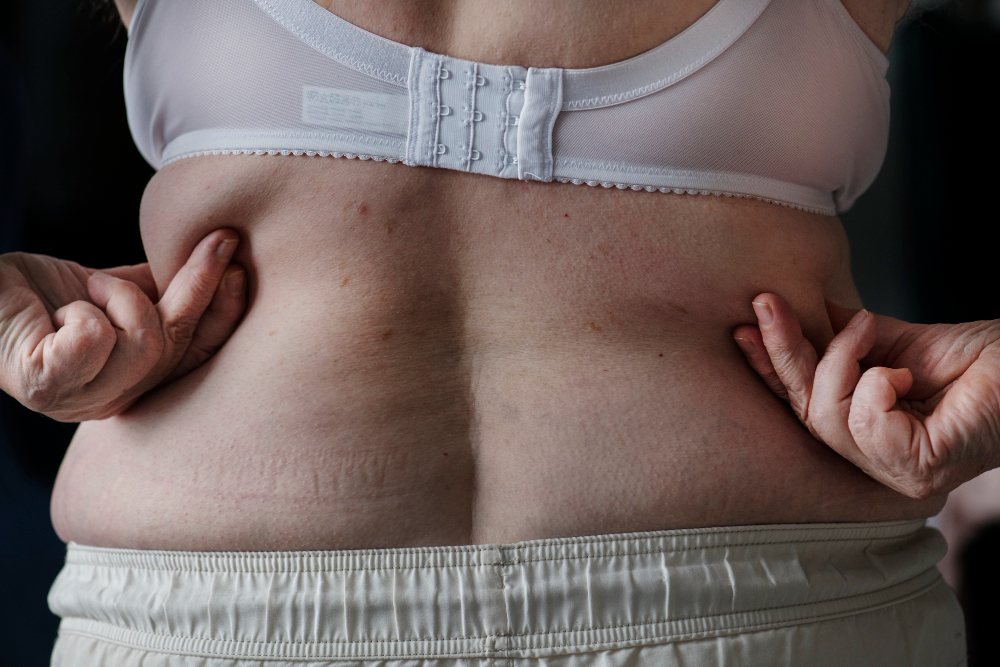
Liposuction is performed through very small incisions, typically only a few millimetres wide, which are placed wherever possible in natural creases, skin folds, or areas covered by underwear. The resulting marks are small and usually fade substantially over several months to a year, though like all scars they are permanent in the sense that the skin never returns entirely to its original state. How visible they remain depends on incision placement, individual healing, skin tone, and aftercare.
Why liposuction scars are small
The scarring from liposuction is minimal compared with most body-contouring surgery, and the reason is structural. Liposuction works through a cannula, a narrow tube that is passed beneath the skin to loosen and remove fat. The incision only needs to be wide enough to admit that tube.
Cannula diameters vary with the technique and treatment area, but incisions are generally in the range of a few millimetres. That is closer to the mark left by a large needle than to a surgical cut in the conventional sense.
It is worth contrasting this with skin-removal surgery. An abdominoplasty, for example, involves a long incision because the operation removes a section of skin. Liposuction leaves the skin intact, which is precisely why the marks are so small and also why it cannot correct loose skin.
Where are the incisions placed?
Placement is a deliberate part of surgical planning rather than an afterthought. A surgeon needs access to the fat from more than one angle to blend the contour smoothly, so several small incisions are usually made around each treated area. Their positions are chosen to be as inconspicuous as possible.
Abdomen and flanks
Incisions are commonly placed within or near the navel, low on the abdomen where underwear or swimwear would sit, and in the crease at the sides of the waist.
Thighs
The groin crease, the fold beneath the buttock, and the back of the knee crease are all used, since each conceals a small mark within an existing line of the body.
Upper arms
Access is usually taken near the elbow or within the armpit, both of which sit away from immediate view.
Chin and neck
Incisions are typically placed directly under the chin and sometimes just behind the earlobe, where the shadow of the jaw and ear conceals them well.
Back
Marks are generally positioned along the bra line or within natural creases across the back. Our article on back liposuction and how the area is treated covers this region specifically.
If you want to understand how different techniques influence access and cannula choice, our overview of the main liposuction methods sets out the differences.
How liposuction scars heal over time
Liposuction incisions usually close within one to two weeks. The marks are typically pink or reddish at first, darken slightly over the following weeks, then gradually lighten and flatten over roughly six to twelve months. The appearance at three months is not the final appearance.
The pattern is broadly consistent. In the first weeks, the incision sites are healing wounds and may be slightly raised, tender, or discoloured. Over the following months, the body remodels the scar tissue, and the marks soften and pale. Most patients find they become difficult to notice at conversational distance, though they remain detectable on close inspection.
Patience is genuinely required here. Scar maturation is slow, and judging the result too early leads people to worry about marks that will look considerably better six months later.
What influences how visible the scars remain
Individual healing tendency
Some people form scars that are thicker, raised, or more pigmented than average. Hypertrophic scars remain within the boundary of the original wound; keloid scars extend beyond it. If you know you tend toward either, tell your surgeon before surgery — it changes how incisions are planned and managed.
Skin tone
Deeper skin tones can be more prone to post-inflammatory hyperpigmentation, where the healed mark remains darker than surrounding skin for a period. This is a normal healing response and often improves with time and sun protection.
Sun exposure
Ultraviolet exposure on a fresh scar can darken it in a way that persists. Keeping healing incisions covered or protected from the sun during the first months is one of the more effective things a patient can control.
Infection or delayed healing
An incision that becomes infected or heals slowly tends to scar more noticeably. Following wound-care instructions properly is directly relevant to the cosmetic result.
Smoking
Smoking impairs blood supply to healing tissue and is associated with poorer wound healing generally.
How to help incisions heal well
Most of what helps is unremarkable but genuinely effective. Keep the incision sites clean and follow the dressing instructions you are given. Do not pick at scabs. Wear your compression garment as directed, since it supports the tissue and reduces tension across the healing sites. Protect the area from the sun. Do not apply creams, oils, or scar products until your surgeon confirms the wounds have closed and it is appropriate to start.
Once healing is established, some surgeons recommend silicone-based scar treatments or gentle massage. Whether these are appropriate, and when to begin, is a decision for your surgeon based on how your incisions are healing.
Our article on aftercare that supports a smoother recovery covers the wider recovery period these habits sit within.
When scarring becomes a concern
Contact your surgeon rather than waiting if an incision becomes increasingly red, painful, warm, or swollen; if there is discharge, or if a scar is thickening and raising rather than flattening as the months pass. Early assessment gives more options; thickened scars are considerably easier to influence in their first year than once fully mature.
For established scars that remain troublesome, treatments do exist. Our page on scar treatment options outlines what can be done.
Frequently asked questions
How big are liposuction incisions?
They are small, typically a few millimetres across, large enough only to admit the cannula used to remove the fat.
Do liposuction scars go away completely?
They fade substantially but do not disappear entirely. Most become difficult to notice in normal circumstances, though they remain visible on close inspection.
How long do liposuction scars take to fade?
Incisions close within one to two weeks, and the marks continue to lighten and flatten over roughly six to twelve months as the scar tissue matures.
Will liposuction scars be visible in swimwear?
Surgeons generally place incisions where clothing or natural creases conceal them. Whether that is achievable for your treatment areas is worth asking about specifically at consultation.
Can I use scar cream after liposuction?
Only once your surgeon confirms the incisions have fully closed. Applying products to open or healing wounds can interfere with healing.
Do I get more scars if more areas are treated?
Each treated area needs its own access points, so treating more areas means more small incisions. Each mark remains the same small size.
Are scars worse with laser or ultrasound liposuction?
Energy-assisted techniques use similarly small incisions. Some require care at the incision site to avoid thermal injury, which is one reason technique selection and surgeon experience matter.
Asking about incision placement before surgery
Incision placement is something you can and should discuss beforehand. A surgeon can explain where access is needed for your particular treatment areas and how those points will sit relative to clothing. If you would like to discuss your own case, our page on liposuction at our Hyderabad clinic explains how consultations are arranged.